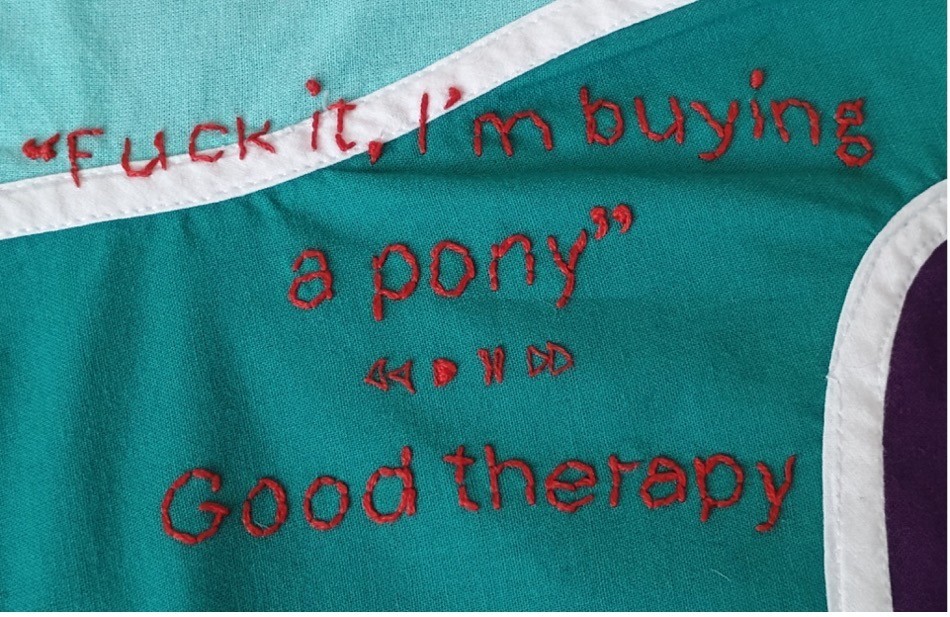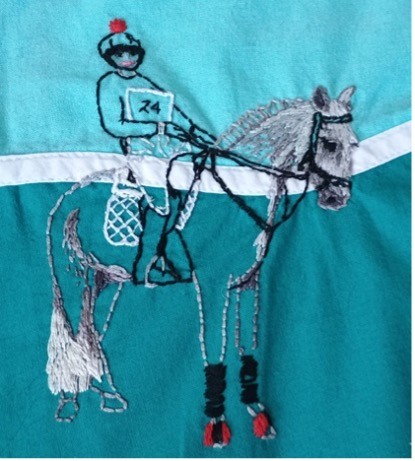

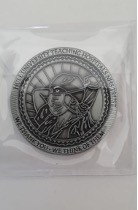
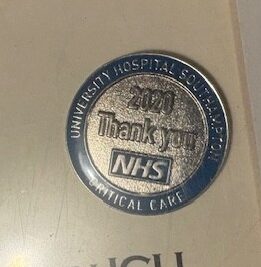
In the fourth blog in this series on our upcoming academic art installation “COVID’s Hidden Scars”, we are going to focus on the creation of the Critical Care Moral Injury Curtain and Critical Care Moral Repair Quilt through a collaboration with the wonderfully talented crafter Sally-Ann Spencer Grey. A large challenge of any project of this size is to do justice to the data. If you have 123 interviews and over 6000 minutes of data across 6 years, it is almost impossible to translate even a quarter of that into many traditional academic forms, particularly standard journal articles (the most common outlet in my discipline). The art installation allowed us to experiment with a novel way of presenting data and bringing to life the many evocative words, images and objects described throughout the interviews which captured nurses’ moral injury (and later their repair). From one nurse who described highly emotional written reflections onher time in the ICU during the pandemic which she kept “in a box with the monsters under the bed” to a nurse who shared her feelings of betrayal at being handed a commemorative coin by her hospital to thank her for her pandemic contributions (“is that all I was worth?”). Or, just as equally capturing nurses’ moral repair, by sharing stories of recovery through walking dogs to hiking in mountains or conversely evoking an unstable, impossible-to-build gingerbread house to reflect their perceived failure to be resilient.
The idea of representing this imagery and text within a patchwork quilt came whilst applying for the British Academy fellowship which enabled us a team to conduct the 4th round of interviews and this wider work. Quilts have a wonderful history in terms of representing women’s history as well as amplifying voices of marginalised or ignored groups – both of which seemed to fit the project. I also came across a number of existing quilting projects such as Speak their name (remembering those lost to suicide) which showed what amazing things could be achieved through these kinds of approaches. Our intention to create a quilt led us to adopt an object elicitation approach for the 4th round interviews in which we returned to nurses 3 years after the 3rd round of interviews to talk about life since the end of the pandemic. The research team asked nurses to:
Identify and bring along 3 objects that represent your moral injury during the pandemic and 3 objects that represent your moral repair (or lack of/struggle with repair) since the pandemic. We are very open to the nature of these objects as long as they mean something to you in relation to the emotional wounds (of betrayal, guilt, anger, shame) and resulting psychological distress you experienced as a nurse during the pandemic (moral injury) and in relation to things that represent your repair (or even lack of repair) experienced since the pandemic capturing how these wounds may or may not have started to be healed by yourself and others. So, feel free to pick any objects that reflect these (small or large – feel free to use photos if some objects are too large, too valuable or of place).
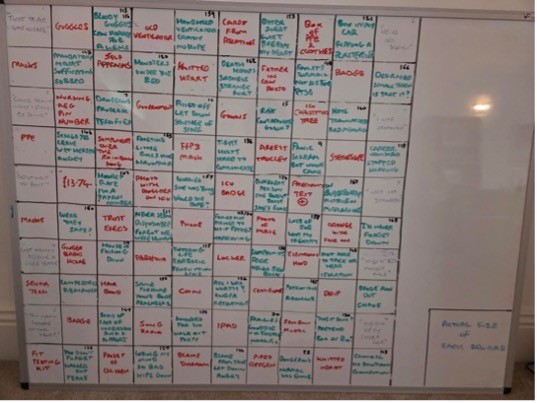
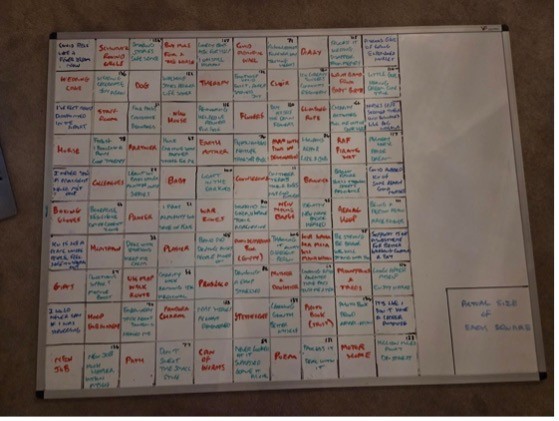
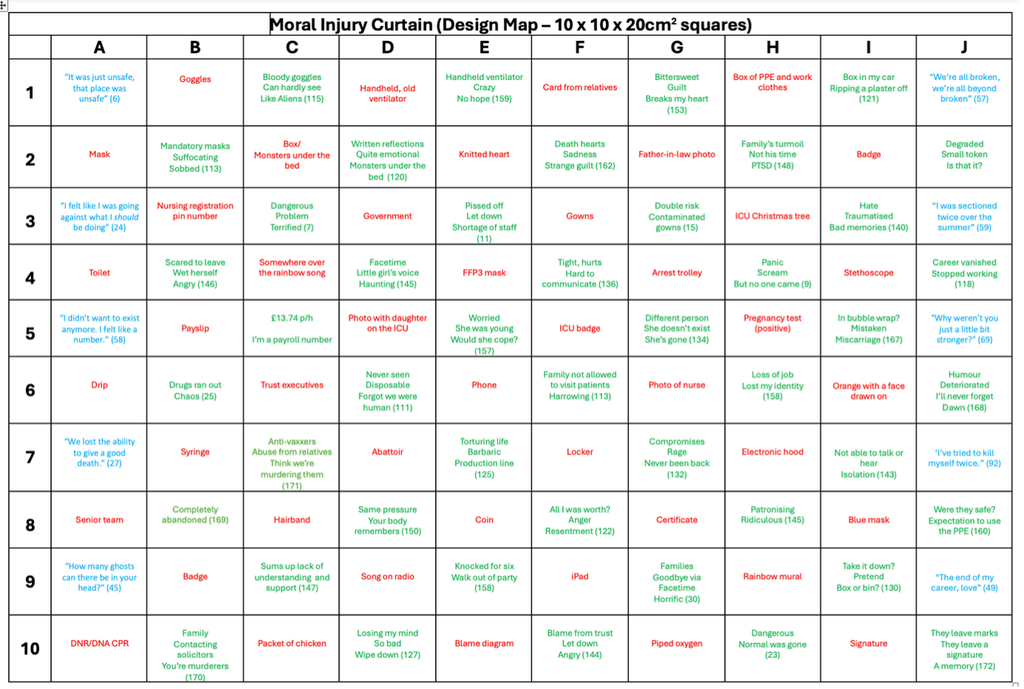
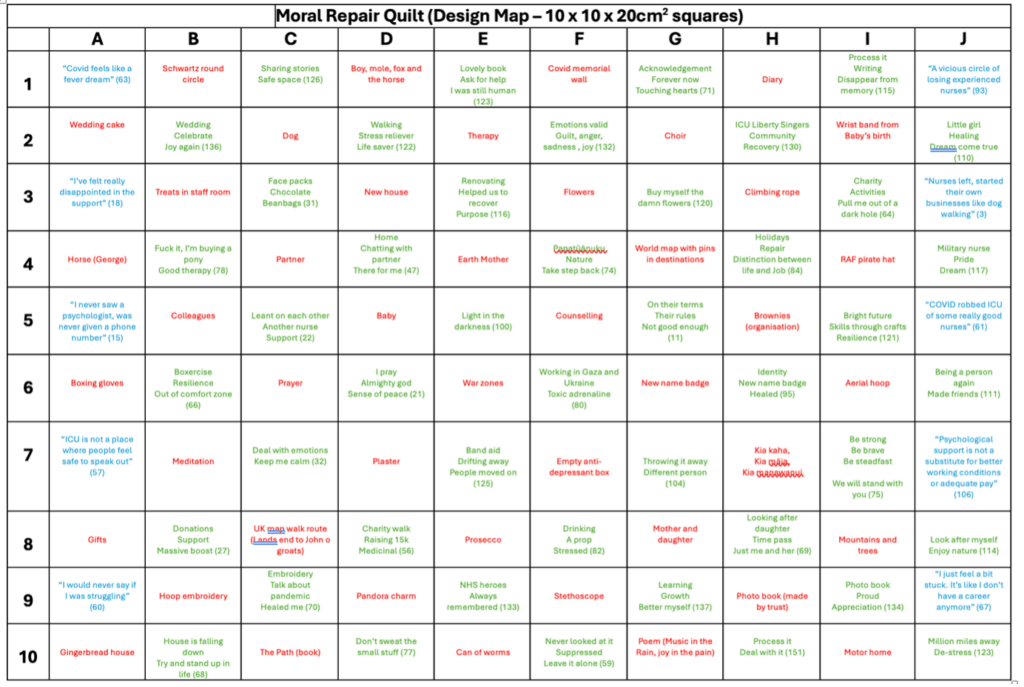
This led to a large number of fascinating objects being shared by the nurses, each with a story attached, which helped us to understand more deeply about their moral injury and repair. So much so, we realised it would be possible to produce two distinct albeit interrelated artistic pieces: a Critical Care Moral Injury Curtain and Critical Care Moral Repair Quilt, each reflective of the different parts of nurses experiences. I then spent a significant amount of time re-analysing the data (finding the best quotes/additional objects) and designing the layout of each of these, carefully determining what objects or quotes might work best where in terms of subject/design/content. First, I drew this out on an admittedly crazy looking whiteboard (it was easier to experiment with ideas this way) and then later (once settled) within a neater, easily sharable digital version. In order to cover the broad array of objects and actually see objects and quotes, the quilt and curtain were designed as 2m x 2m artefacts split into 20cm-by-20cm boxes (100 boxes in total). We then discussed these designs as a broader team ensuring that they a) captured what the nurses were saying and b) were appropriate to represent in one way or another.
The next challenge was to find an artistic collaborator who a) believed that it was possible to craft these wild and eclectic creations in a period from June to October 2026; b) had the talent to deliver this and do justice to the huge amount of work we had all put into the project and c) was as passionate as we were about mental health and well-being in healthcare. The research team hit the jackpot, therefore, when Sally-Ann Spencer Grey was introduced to us by research team member Nicki Credland, as she ticked all those boxes and then some. A quick bio (written by Sally herself) is a great overview of the broad skillset and experience she brought to the project:
My career may look like it belongs solely to the worlds of clinical healthcare, leadership, and academia but creativity underpins it all. With a background spanning local government, therapeutic radiography, health and care education, NHS commissioning, and charity trusteeship (National Gulf Veterans and Families Association (NGVFA)), I now have the opportunity to spend more time in restorative practice and creative health to improve wellness, recovery, and professional growth.
I consider myself a crafter rather than an artist, believing that crafting is creativity with purpose undertaken skilfully, mindfully, and with passion. My craft skills extend beyond traditional activities working with materials and objects; they live in my approach to communication, empathy, education and leadership, and every project, encounter, event and challenge is an opportunity to develop these.
Based in the East Riding of Yorkshire, where I live with three black cats (Mia, Mya and Gomez) and my partner of 30 years (Noel), I am now beginning a chapter of life dedicated to exploring where my passion for creativity will take me next.
Sally was subsequently commissioned to craft the quilt and curtain and we all met regularly to discuss the practical challenges and compromises that were required in terms of representing objects. Here, we naturally deferred to Sally’s vast experience of what could or could not be achieved through embroidery but more often than not Sally also came up with alternative representations for objects that improved on the original design. She also presented us with a range of wonderful ideas around design in terms of colours and fabrics to be used but also adding an extra layer of narrative. On the first of these, the moral injury curtain was made with organza, a thin, transparent fabric reflecting the vulnerability of nurses with a muted palate to reflect the drained nature of moral injury, feeding on emotion.
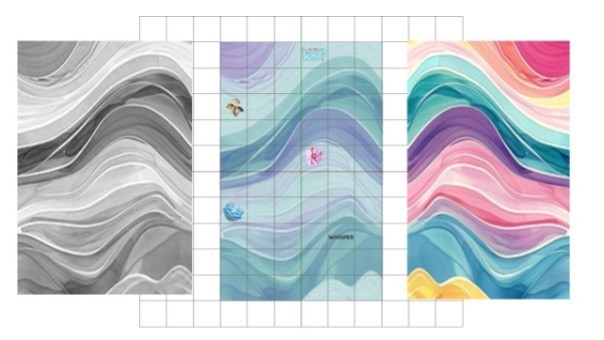
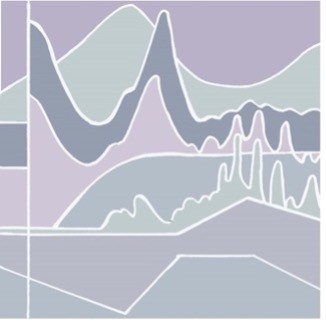
Meanwhile, the moral repair quilt design is more substantial, thicker and padded, whilst also containing a brighter and warmer palate of colours to reflect hope and the possibilities of recovery. On narrative development, Sally also introduced a design to both the quilt and curtain (see below) in which different graph lines represent statistics which effected the nurses on the ICU. For the curtain (left, below), the straight vertical line from top to bottom represents when the COVID 19 pandemic reached the UK in March 2020 when the first lockdown began, the first peak. The space to the left of the line is pre-COVID 19. Indicating the start of this chapter in people’s lives, could be seen as the spine of the book that contains life’s chapters. The space to the right – living/working through the pandemic through 3 lockdowns – plan b restrictions and on through to June 2023. Each horizontal lines represent data collected over the period nationally in the UK and presented as graphs by the Department of Health and Social Care, Office for National Statistics, and The King’s Fund. These create a landscape of the period, the social fabric and everyday context in which moral injury occurred. Looking from the left-hand side before the vertical line and from top to bottom the lines represent:
- Staff sickness
- Covid deaths
- Hospitalisation due to COVID/admissions to Critical Care
- Infection rates for COVID
- Staff recruitment to the NHS
- Staff leaving the NHS
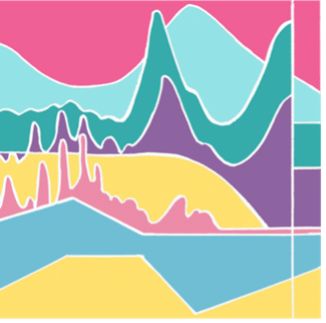
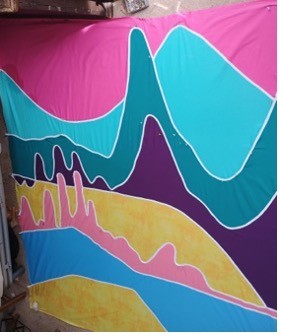
The repair quilt (centre and right, above) then shows things returning (to some degree) to normal – or what we now consider to be normal times. These ingenious additions by Sally provided a further depth to the design that framed the placement of the moral injury and moral repair objects and quotes. The most time consuming and complex part of the production process, however, was still to come, and Sally spent months painstakingly embroidering the representations of the objects and “quotes”. As there was only so much space in each square, we included three words from each longer quote which Sally separated with a “play, pause, fast forward, rewind” signs separating each word (with pause highlighted in the moral injury curtain – signifying how trapped and stuck nurses felt during this period – and play highlighted in the repair quilt signifying efforts to move forward). I have included a small number of examples on the site so far, and will add more after the installation launches.
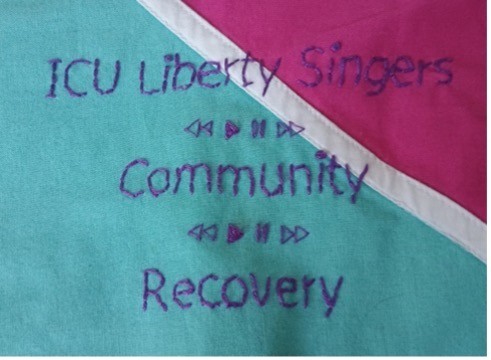
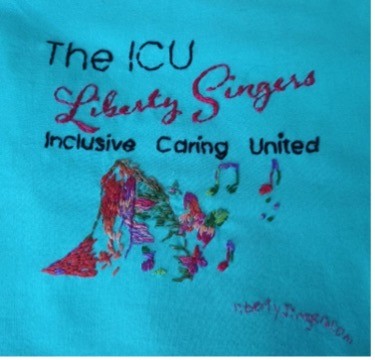
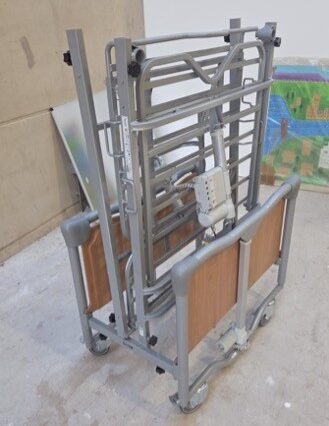
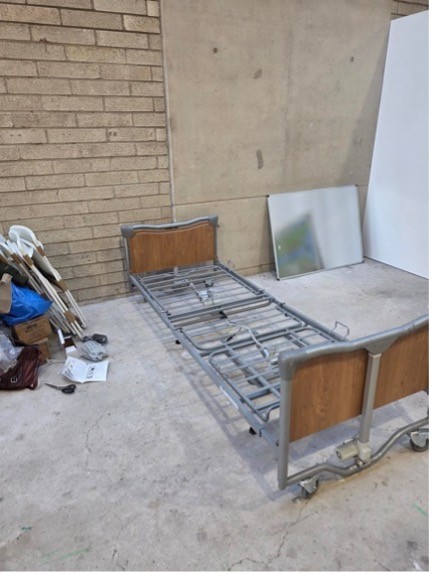
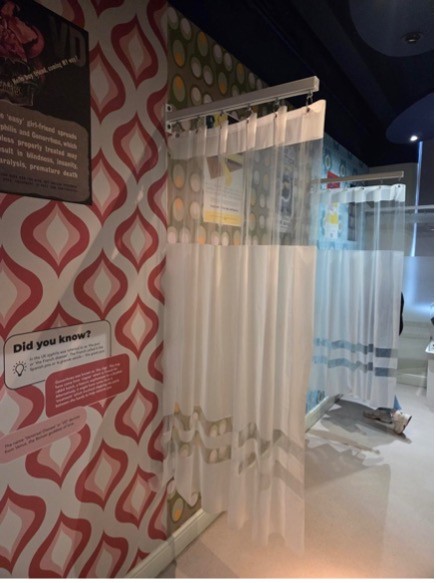
Given there were 200 squares in total to embroider (on top of the original background design) I cannot overstate the incredible work put in here by Sally, to bring the designs/ideas to life. It is such a brilliant representation of what the nurses felt, experienced and did during the pandemic and since. The next challenge, though, was how to present the quilt and curtain properly in a way that worked. Following the original idea of recreating a critical care “bed”, I had managed to track down a second-hand hospital bed (below, centre and left) that was purchased and stored in my own bedroom for six months and assembled on site, ready for the quilt to be draped over. The moral injury curtain, meanwhile, presented its own problems as I wanted it to come out from the wall and be the first thing people saw (exploring the darker side of our findings), but curtain poles tend to go across rather than out. I then came across another installation at the Thackeray Museum, Leeds which used this kind of approach for a shower curtain (see below, right). And this inspired me to try and find something similar. However, as the curtain is around 2m x 2m, it would need to come out further. After a considerable amount of searching, I found a solution which came all the way from China – a clothes drying pole that extends from the wall with the necessary hooks to hang the moral injury curtain on. As I have discovered throughout this artistic process, there is always a need to improvise and – as difficult as it may be – to compromise to find solutions that work and that you might not have initially envisioned.
The resulting quilt and curtain are a testament to a huge amount of work by the whole research team. From the 6000 minutes of interviews to the huge amount of design work, the painstaking and meticulous crafting and the lengthy installation (of the installation!), it has been an incredible collaborative experience to be a part of. I will post more pictures of the quilt and curtain in due course, but here are some additional examples of squares, each with an incredible story behind of injury and repair.