
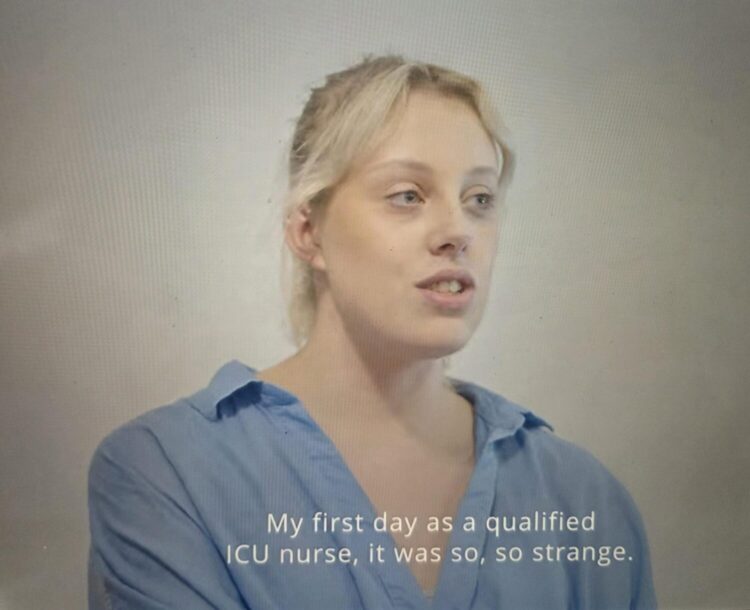

In the third blog in this series on our upcoming academic art installation “COVID’s Hidden Scars”, I am going to zoom in on the performance component The Critical Care Monologues co-created with the fabulous Rebel Roots Theatre. One aspect we wanted the installation to include was an audio element, after all one of the main purposes of the work was to amplify the voices of the critical care nurses; to tell their stories of moral injury and repair over the past 6 years. It has always struck me as odd that when conducting an interview, researchers experience the full and wonderful richness of a dialogue with a range of the senses most commonly through audio and visual but also often physically “feeling” the words of the people they are talking to, but all the research steps that follow (transcription, coding, conceptualising, writing) remove a significant amount of this richness. The 123 interviews within this project were highly emotional and tears were shed by interviewee and interviewer, often during the exchange but sometimes later during research project debriefs. A journal article, if presented and written well, can evoke similar emotions, but in their necessary detachment from the subject (for practical and ethical purposes), the interviewee is unavoidably silenced and thus blunted in their affect. So, the creation of an art installation for this project seemed like an ideal opportunity to re-establish the audio and visual by bringing the interviews to life through performance.

There were some initial reservations about doing this. It was clearly inappropriate to ask the nurses themselves to reproduce the interviews. However, some might argue that it was equally inappropriate to put the nurses heartfelt words into the mouths of actors. It was important, therefore, to carry this out with great care and consideration, as a way of amplifying rather than mimicking experiences and voices. The first task, therefore, was to create a set of monologues from the nurses’ interviews that portrayed as far as possible a) what they actually said and meant in the interviews and b) the range of nurses’ experiences to reflect the diversity of careers and journeys of from moral injury to moral repair (or lack thereof). Fulfilling both of these required a complete re-coding of the 123 interviews and each monologue (roughly 7 minutes long) is a heavily edited version of a nurses longer set of interviews (lasting between 90 minutes and in some cases over 180 minutes). Each monologue is, therefore, comprised of 9 or 10 shorter parts covering where possible their memories of/thoughts on:
- Childhood aspirations of nursing
- 1st days on the ICU
- What they enjoy most about critical care nursing
- What they enjoy least
- The 1st days of the pandemic on the ICU
- Their pandemic experience
- Moral injury experienced
- Moral repair experienced
- Their future in the profession
- Broader final comments about the profession critical care nursing
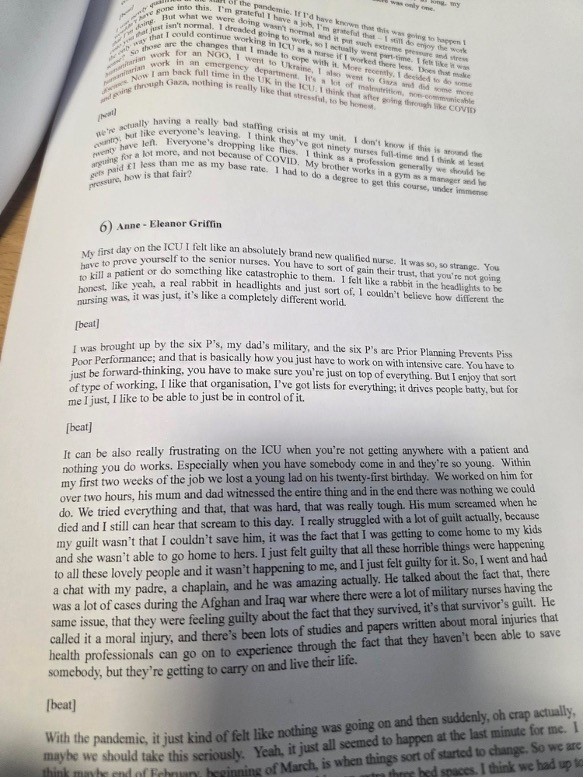
The resulting monologues are snapshots of the experience of 16 different critical care nurses. 7 of them have been selected here for the production and an example of the script is below.
The second task was to then cast these 7 nurses to perform the monologues. One way of avoiding some of the difficulties outlined above (putting words into the mouths of actors rather than the nurses) was to cast younger versions of the nurses which would avoid confusion about the identity of the nurses (these were clearly actors far too young to have been critical care nurses in the pandemic) whilst also being a powerful reflection of the nurses’ life narratives – they too, after all, were young girls once upon a time with hopes and dreams of a rewarding and fulfilling career. Having worked through these concerns, it was at this point in the process that I sought out a suitable local theatre company and eventually made contact with Rebel Roots Theatre. Based in Leeds and led by the wonderful actor/director Tyler Pickles, they describe themselves as follows:
Rebel Roots Theatre Company is a Leeds-based company dedicated to supporting and developing emerging artists, with a focus on working-class voices. We create bold, accessible theatre that reflects real Northern lives, while opening doors for new talent to grow, collaborate, and be seen.
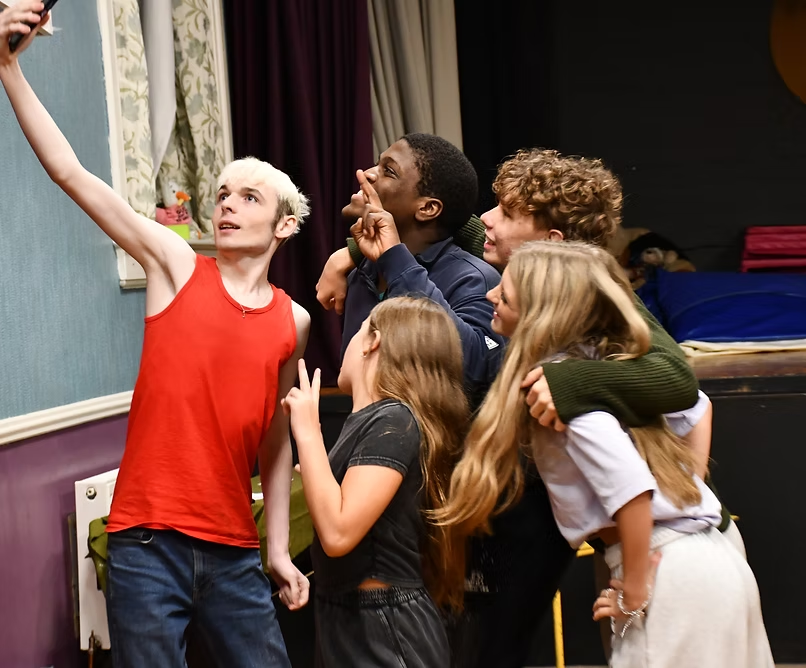
This artistic collaboration would prove to be a perfect fit for the project and a group of young women (some of whom were receiving their first professional acting credits) had the opportunity to bring the interviews to life. To ensure a good fit between monologue and actor, Tyler read them and paired them with the appropriate person, considering content, style and personalities of those involved. The casting was as follows:
- Sophie, Critical Care Nurse for 11 years (performed by Phoebe Clough)
- Marie, Critical Care Nurse for 10 years (performed by Kennedy Pickles)
- Ashleigh, Critical Care Nurse for 10 years (performed by Abi Hed)
- Zuzanna, Critical Care Nurse for 12 years (performed by Tara Mackness)
- Sienna, Critical Care Nurse for 1 year (performed by Freya Sweeney)
- Anne, Critical Care Nurse for 6 years (performed by Eleanor Griffin)
- Georgia, Critical Care Nurse for 12 years (performed by Lily Higgins)
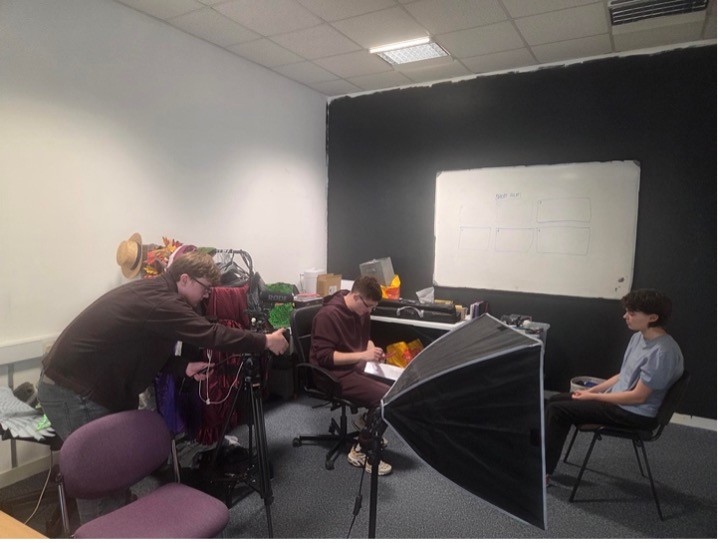
The monologues were shot on camera by Rebel Roots’ Eddie Clover in a single day (in 90-minute slots per monologue) – a big thank you to Empath Theatre, Wakefield for the use of their facilities for this. I wanted a “talking heads” style (think Alan Bennett, not David Byrne), and wanted it to be highly naturalistic. It was important for the integrity of the interviews that the acting did not feel overly theatrical or too emotional (the nurses often laughed in the interviews at parts where you thought they might cry and vice versa), and the actors through Tyler’s direction did an amazing job of capturing the right tone of the performance. I then provided a small amount of guidance on editing so that rather than see each full monologue back-to-back we would see all nurses answers to their childhood aspirations of nursing, then all nurses answers to their 1st days on the ICU and so on. This would provide a much clearer reflection of the range of nursing careers and perspectives on moral injury and repair over this period, a pre-stated aim of the performance. Eddie did a fantastic job with the complex editing process to create the final files which were ready to stream as part of the installation with the intention to play them on loop on a TV at the end (or to the side, depending on the space) of a recreated hospital “bed” (some indicative inspiration photos below).
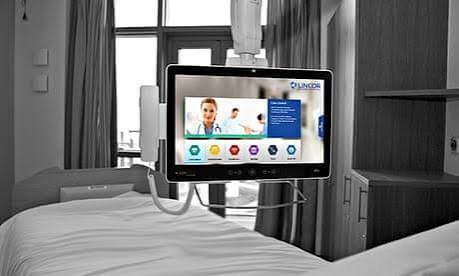
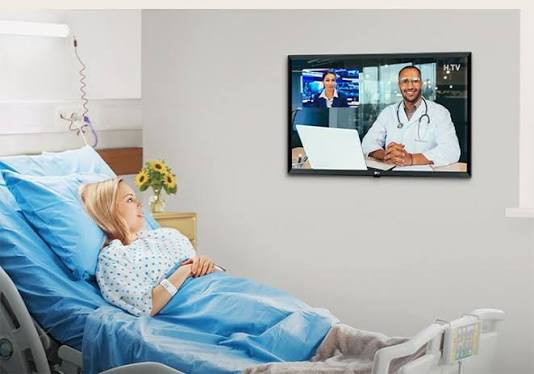
The resulting 43-minute filmed performance is intended to be watched and listened to (with headphones running from the TV to the seated viewer in IKEA “hospital” chairs) within the installation. This immersion within the “bed” setting and with quilt and curtain in touching distance, adding to the weight of the words and performances being displayed. To ensure accessibility, I also ensured that captions were included in the performance so that as many people as possible could follow. As the performance lasts around 50 minutes, it is also more likely that a lot of people will watch/listen to snippets of these performances whilst actually there in the gallery. I have therefore made the full performance available below so that people can watch and/or re-watch the Critical Care Monologues so to better understand the working lives of these healthcare professionals. Please let us know what you think of the performance and/or the wider installation below in the comments. We would love to hear what it made you think about however short or long, to express how the installation has made you feel, what it has made you think about or reflect upon, even what it might inspire you to do or what we should do as a community in response to the issues raised.