
In the second blog in the series on our upcoming academic art installation “COVID’s Hidden Scars”, I am going to focus on the creation of the “mural window” in collaboration with the incredibly talented artist James Croft. It was important for the installation to capture the broad range of perspectives of the ICU nurses within and across the study. From the disturbing accounts of moral injury endured to inspiring stories of moral repair alongside the darkly humorous stories of nurses’ experiences coupled with worrying accounts lack of repair, more often than not, due to lack of support post-pandemic. In this sense, we agreed that the installation needed to capture the balance of light and shade, and draw upon this juxtaposition to bring out the enduring meaning of these nurses’ experiences.
Quite early on in the installation design, therefore, I envisaged a “mural window to the world outside of the ICU” fulfilling this role. From the very beginning of our project in 2020, it became apparent to us through the interviews and the broader literature that public understanding of what goes on within an ICU ward in normal times, let alone during a pandemic, was very low. The only time people tend to see the inside of an ICU is either because they or a close friend or family member is there – a highly stressful experience in which understanding the organisational make-up of the place is not exactly a priority. Indeed, the vast majority of us in society experienced the pandemic from outside the ICU so the installation needed a window to that place, to capture perspectives from this space. And so, the idea of a mural window to be placed somewhere behind the bed was born – but what exactly should this window look like?
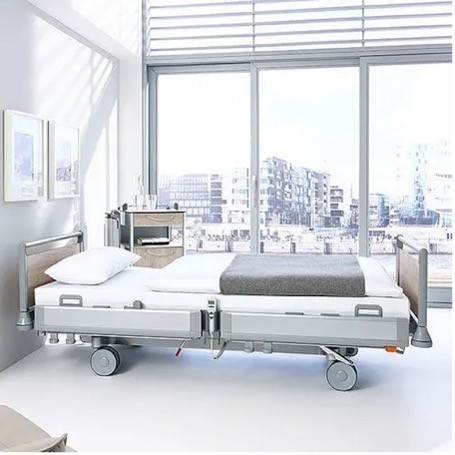
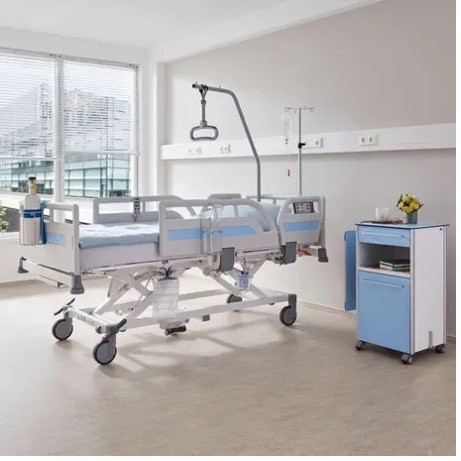
In a practical sense, I took some inspiration from hospital ward photos I came across, depicting beds with windows in the background (admittedly these are not ICU beds nor do they look much like NHS rooms(!) – but they were helpful for imagining what the installation lay out might look like). Inspiration for the artistic aesthetic, meanwhile, was a slightly more magical experience. Walking around Sheffield it is difficult not to take inspiration from the wonderful urban street art scene located around the city from Kelham Island to Meersbrook Park as well as a number of central locations. The works of urban artists such as Pete Mckee, Fauna graphic, Phlegm and Peachzz (see below) are often colourful, sometimes surreal and more often than not reflective of the rich cultural history of the City’s wildlife, humour and political radicalism. This was exactly the feel for the piece which was needed and it seemed like an ideal opportunity to work with someone from this amazing community to bring to life this window to the outside world.
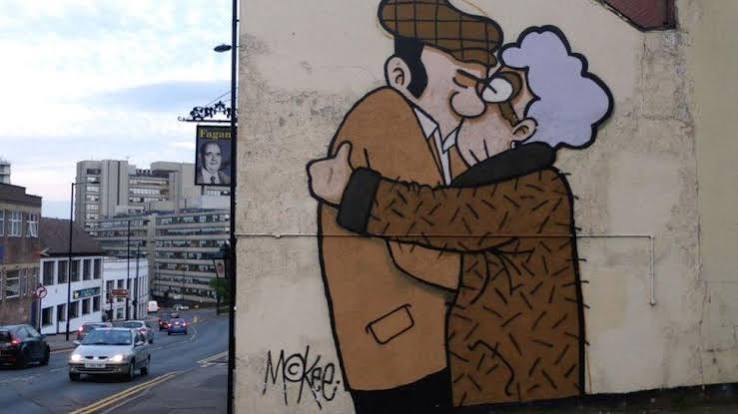
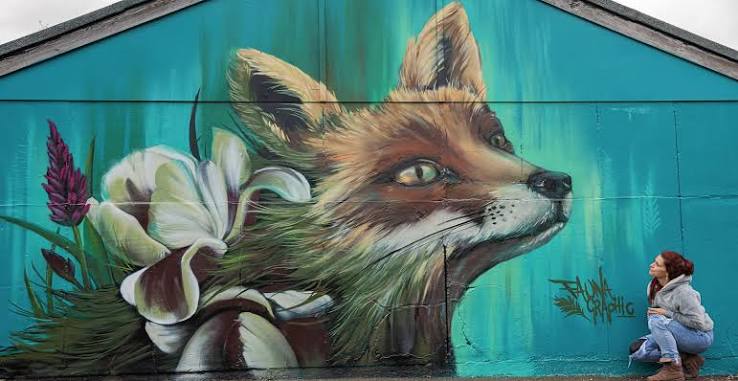
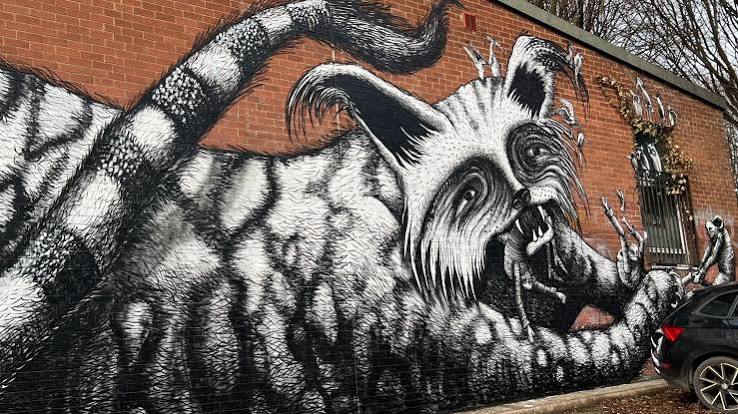
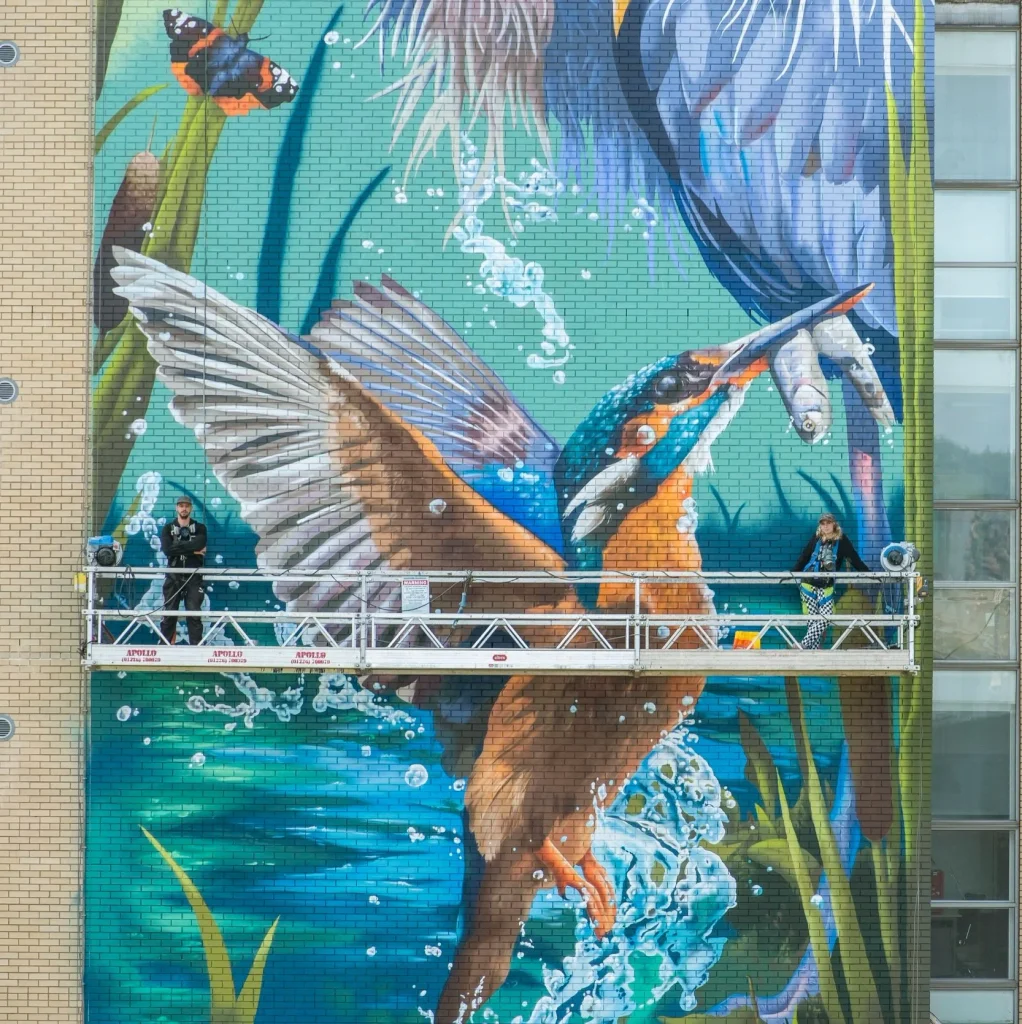
At this point I relied upon the brilliant “Street Art Sheffield” website, a great catalogue of all the urban artwork in the area and organised quite helpfully alphabetically by artist. Whilst clicking through these eclectic works, I was looking for something bright on the surface but darker in tone on closer inspection – a bit like glancing out of a window and all seeming okay but slowly realising all manner of things are “off” or at least different from what they first appeared. It was at this point that I came across the work of local artist James Croft. His work is filled with blues and greens and yellows, with intricate messaging within the imagery as you examine it more carefully. Perhaps a quick bio of James would help at this point to capture the sheer breadth of his artistic talents:
James Croft graduated from Wolverhampton University with a first-class degree in Illustration and has worked as a freelance illustrator for more than 25 years. His career began in magazine illustration before moving into children’s publishing, and he has since illustrated more than 40 published titles. Over the years, he has worked with a wide range of clients, including Aardman Animations, Marks & Spencer, the BBC, Walker Books, Penguin, and Nescafé. James completed his first hospital mural project nine years ago. Since then, his practice has increasingly focused on creating artwork for public and healthcare environments, with dozens of large-scale projects completed, including work for the Herd of Sheffield public art trail. He is passionate about bringing art out of traditional gallery settings and into the places people use every day. His work is driven by the belief that thoughtfully designed environments can help people feel more welcome, supported and inspired.
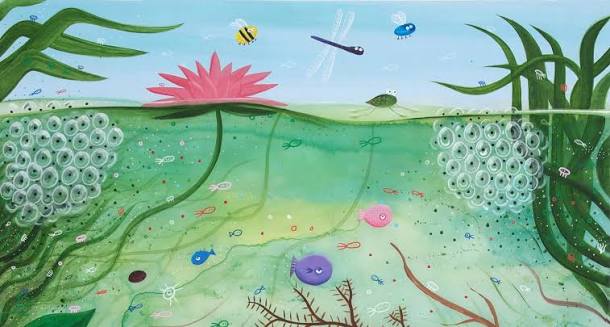
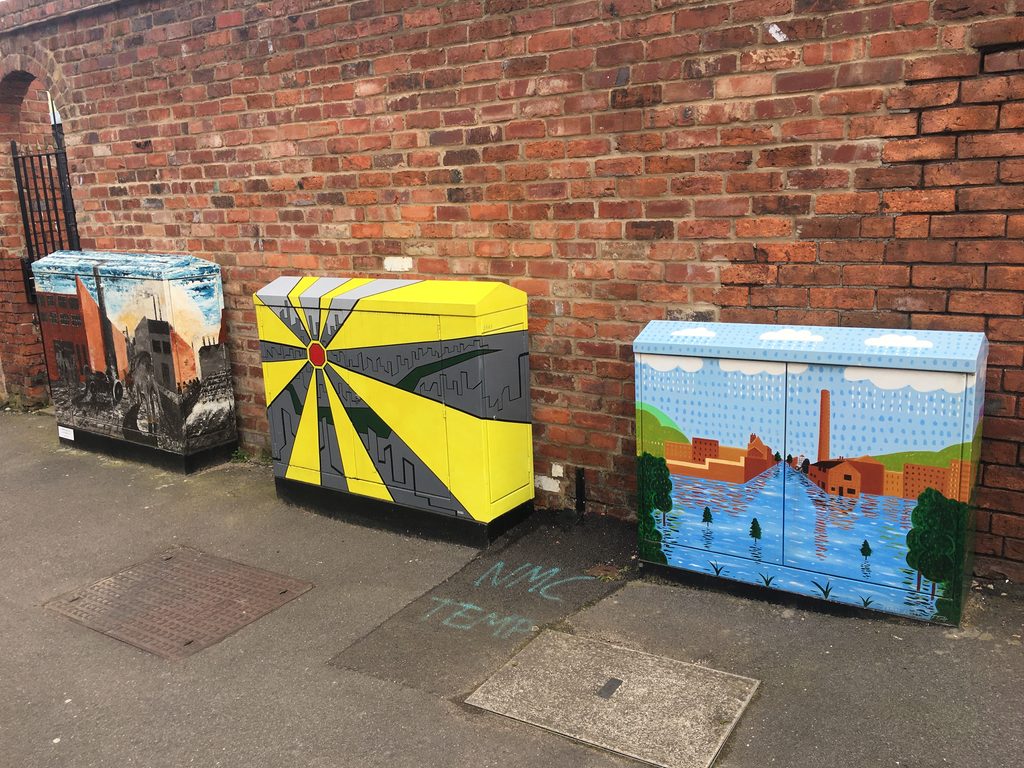
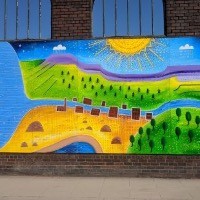
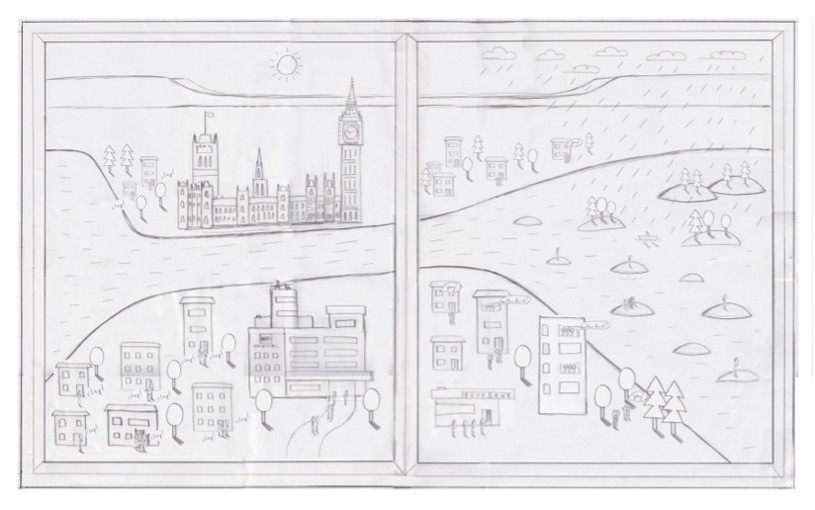
In early 2026 I decided to take a gamble and reach out to James directly through his webpage Mural Works and ask if he was free to discuss the possibility of being commissioned to create a piece for the installation. Thankfully he agreed and we talked extensively about what it needed to contain. This included the aforementioned components of a window, the light, the colour etc but also a story from left to right about the changing attitudes towards nurses as the pandemic progressed, incorporating quotes/key words from the nurses about things like clap for carers, the government, food banks, as you look more closely. Beyond this, James also had the freedom to build on this shared foundation to create some initial designs. This led to some lovely pencil sketches which we met to discuss and then moved on to painted drafts and then a full 180 x 105cm landscape mural. The mural itself is painted on a 3 mm-thick polycarbonate sheet and its surface has been primed with gesso primer. It is painted using acrylic paints and Posca paint pens in a bold, colourful style that portrays a sunny window to the outside world. The mural has been varnished with a UV water-resistant varnish.
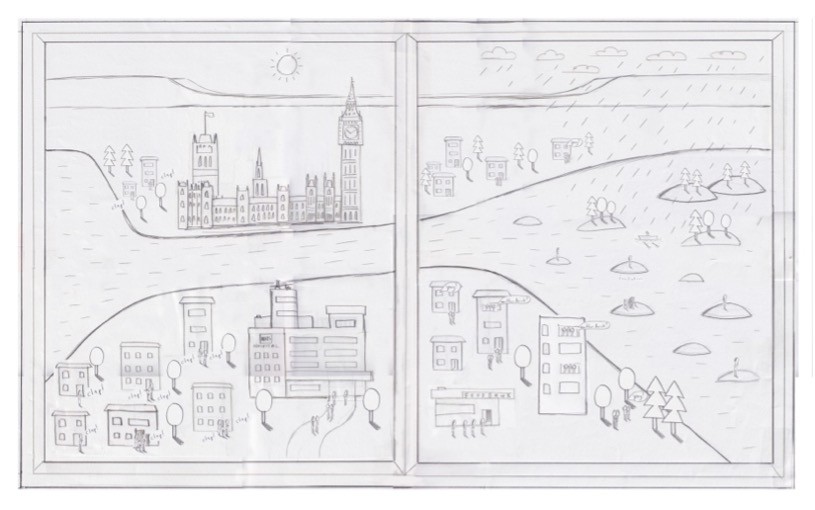
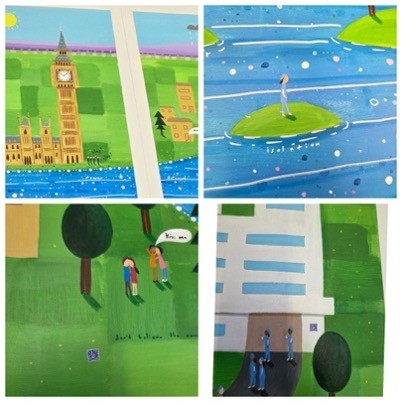
As can be seen above, the mural design moves from left to right from sunshine to rain clouds, from nurses initial positive experiences of public praise for their actions in the pandemic to their isolation and perceived betrayal by the government refusing to reward them with a pay rise and members of the public who began to break social distancing rules. The broader research team, including myself, Peter Hamilton, Nicki Credland, Oonagh Harness and Robert McMurray captured these issues an academic paper accepted for publication in 2026 entitled “From the Clap to the Finger: Collective Professional Memory and Critical Care Nursing in the UK during the COVID-19 Pandemic”. But the mural window allows us to bring these findings to life in a completely different way with colour and visual elements somewhat lacking in traditional academic formats. Finally, it also allowed us to integrate an additional audio element into the installation. I had an idea to embed customised QR codes within the mural as “easter eggs” that if found and hovered over with a mobile camera will open an audio file of a performed recreation of a key quote from our interviews (hover below for an example!). So, next to parliament there is an embedded QR code that James has very carefully inserted which opens up the audio of a quote of a nurse providing her feelings on the government’s behaviour during and after this period. In this sense, we tried again to amplify the voice of the ICU nurse as you look out of the window with them into the world outside. The ultimate decision to name the mural “Scene and Heard” (very nicely thought up by James) seems the perfect title to capture our efforts to make the installation one of creating a space where ICU nurses can finally be listened to.
Please let us know what you think of the mural and/or the wider installation below in the comments. We would love to hear what it made you think about, reflect on and feel as well as any thoughts you have on it and nursing more generally.