
Over the past year, my time as British Academy mid-career fellow has had a transformative effect not only on my understanding of the focus of the fellowship, moral injury and repair experienced by critical care nurses, but on the very nature of academic work. I knew from the outset of the study that a central element of securing the fellowship was to integrate significant public engagement beyond academia. It was for this reason that I committed to the production of an art installation as a novel and interesting way of bridging the gap between the results of the study and the general public. Whilst the scheme notes (and experiences of previous fellows) led me to place this element front and centre, I shall admit that at the time its inclusion was (as these things so often are) a means to an end. A way to secure the grant. The traditional collection and analysis of data (and resulting set of academic publications) was something I instinctively prioritised and the art installation, with all its bells and whistles, would come together later. Over the course of the fellowship that whole dynamic shifted, and whilst we have published a paper with the data (and are working on more), the most challenging, rewarding and exciting part of the 6-year study research is reflected in the art installation.
The installation, Covid’s Hidden Scars, is a portal into another world – the world of critical care nursing – in which one-to-one, round the clock care is provided to unstable, seriously ill patients. It is also a gateway to another time, not so long ago, when the world stood still whilst nurses alongside other healthcare professionals fought against a novel and deadly coronavirus. Five years have passed since the end of the pandemic and to many it exists like a fever dream, a semi-forgotten and left behind period clouded by trauma and loss. The challenging experiences of critical care nurses have been told only in fragments, informally to colleagues or family, in hard-to-reach academic outlets or through healthcare leaders in forensic enquiries. And yet, the voice of the critical care nurse working at the coalface has, so far, been overlooked, buried in time and left unheard leaving us with an incomplete picture of what occurred during this tumultuous period and just as importantly what has happened since.
This installation is an attempt to correct this. Drawing on the results of a six-year study of 123 interviews with 54 critical care nurses, at 4 phases across and beyond the pandemic our team (consisting of me, Dr Martyn Griffin, Prof. Peter Hamilton, Dr Nicki Credland, Dr Oonagh Harness and Prof. Robert McMurray) explored widespread moral injury: a “deep emotional wound…unique to those who bear witness to intense human suffering and cruelty” (Čartolovni et al., 2021, p.590) within the profession. The most recent interviews took place over the past year during the fellowship and explored the extent to which nurses have repaired since this tumultuous period and what has happened to them and their careers. In doing so, the installation amplifies the voices of critical care nurses, telling their stories by unearthing memories of a time that was both challenging and frightening, but doing so in a way that leaves people with a deeper understanding of this period. We do so through the words and stories of nurses who provided care to our family, our friends, our neighbours and members of our community at a time where people felt helpless and afraid. We explore what the nurses saw, how they felt, what they gained and ultimately what they lost to provide a clearer picture of the professionalism of these women and men but also what was left behind afterwards when the pandemic ended, when people returned to their normal lives. Our intention is to light the embers of memories that endured as a way of locating and recognising, and later healing and repairing the invisible scars that lingered and still linger with the nursing profession.
The immersive installation recreates a critical care “bed” (yes, a full size one!) and incorporates:
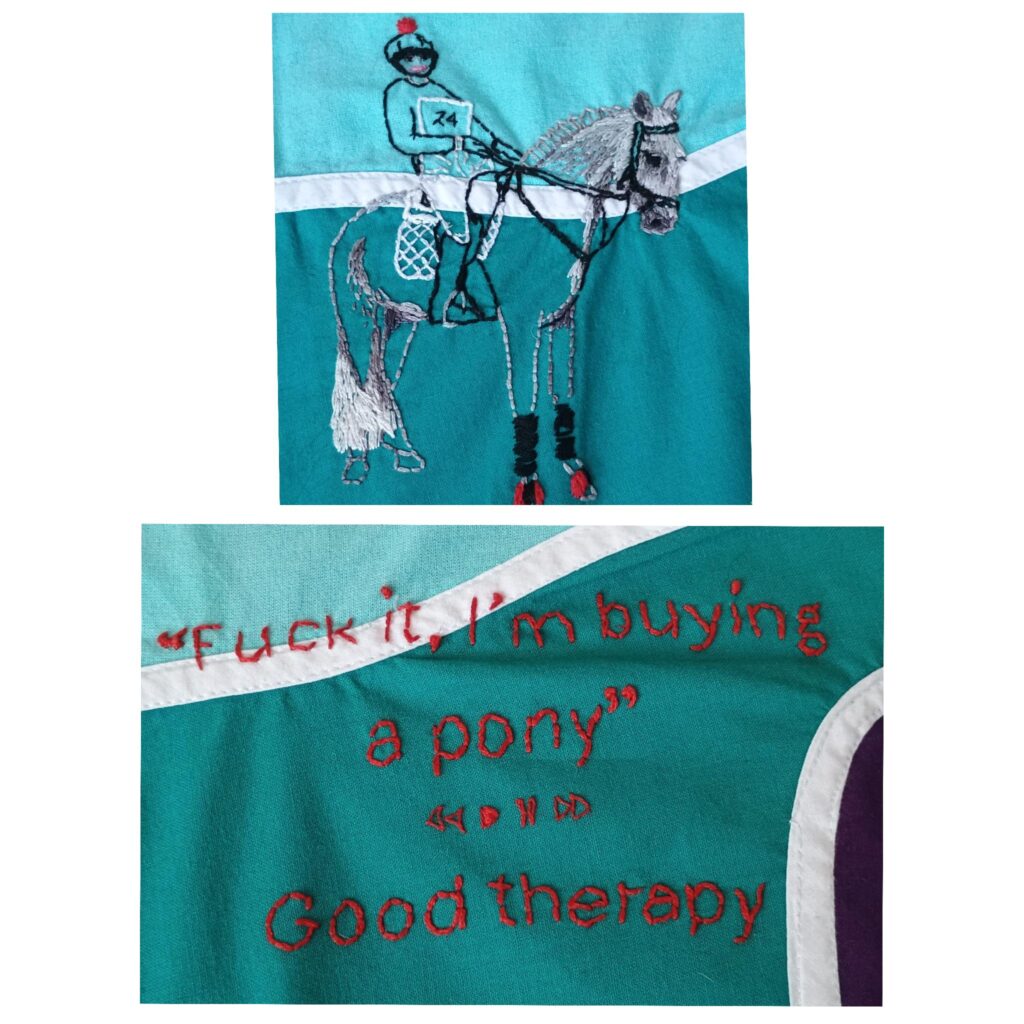
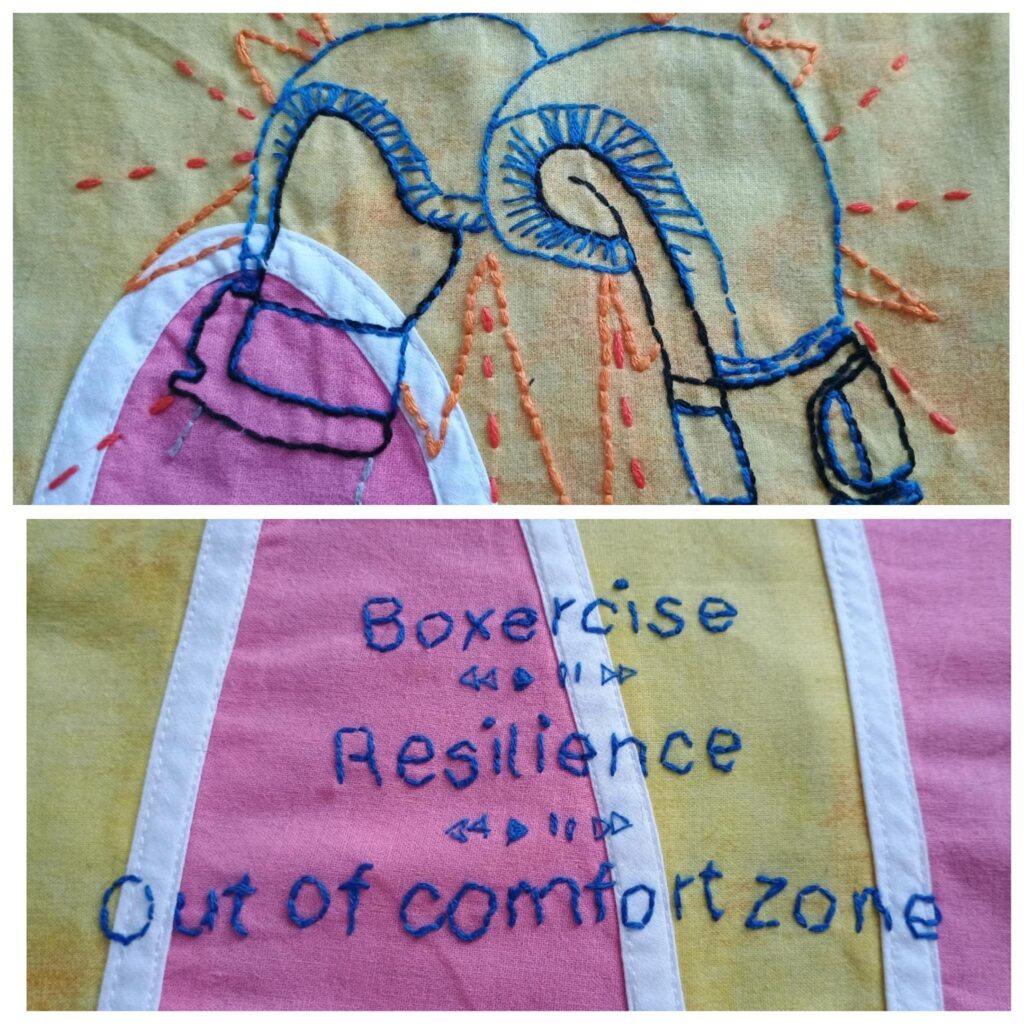
A moral injury curtain which draws around the bed and contains quotes and “objects” from interview findings reflecting moral injury of the critical care nurses (co-designed by Martyn Griffin [MG] and a commissioned artist/former Allied Health Professional, Sally-Ann Spencer Grey, crafted and created by Sally)
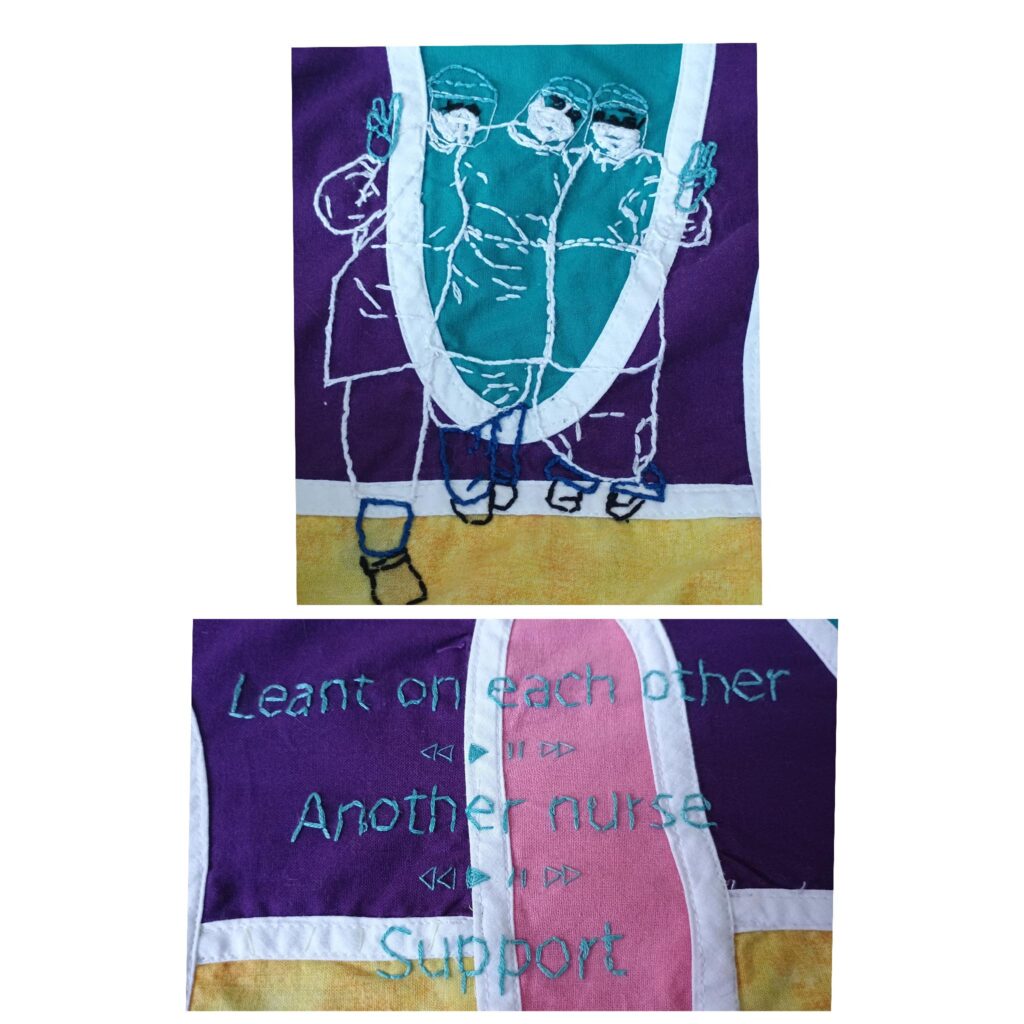
A moral repair quilt which drapes over the bed that incorporates quotes and “objects” from findings reflecting moral repair of the critical care nurses (co-designed by MG and a commissioned artist/former nurse, Sally-Ann Spencer Grey, crafted and created by Sally)
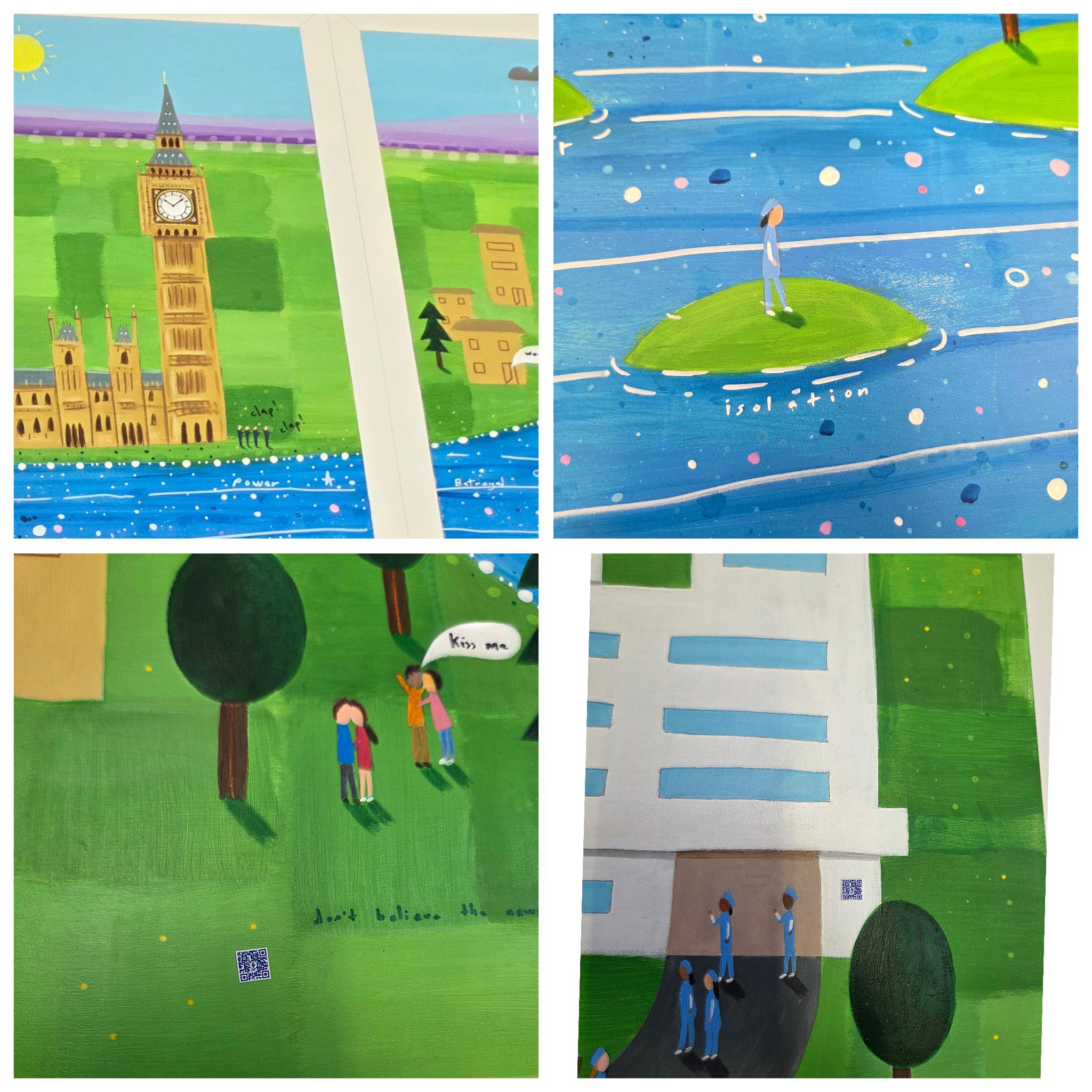
A “window” mural which acts as a view to the “outside world of COVID” covering subjects like “clap for carers” and political issues that the critical care nurses had strong views on in the findings which impacted their moral injury and repair (co-designed by MG and Sheffield artist, James Croft, painted by James)
A re-enactment of nurse interviews on a television mounted on the wall at the end of the bed with a looping video of a re-enactment of quotes in “talking heads style” from findings on moral injury and repair (written/adapted by MG and performed by actors from Rebel Roots Theatre, Leeds)
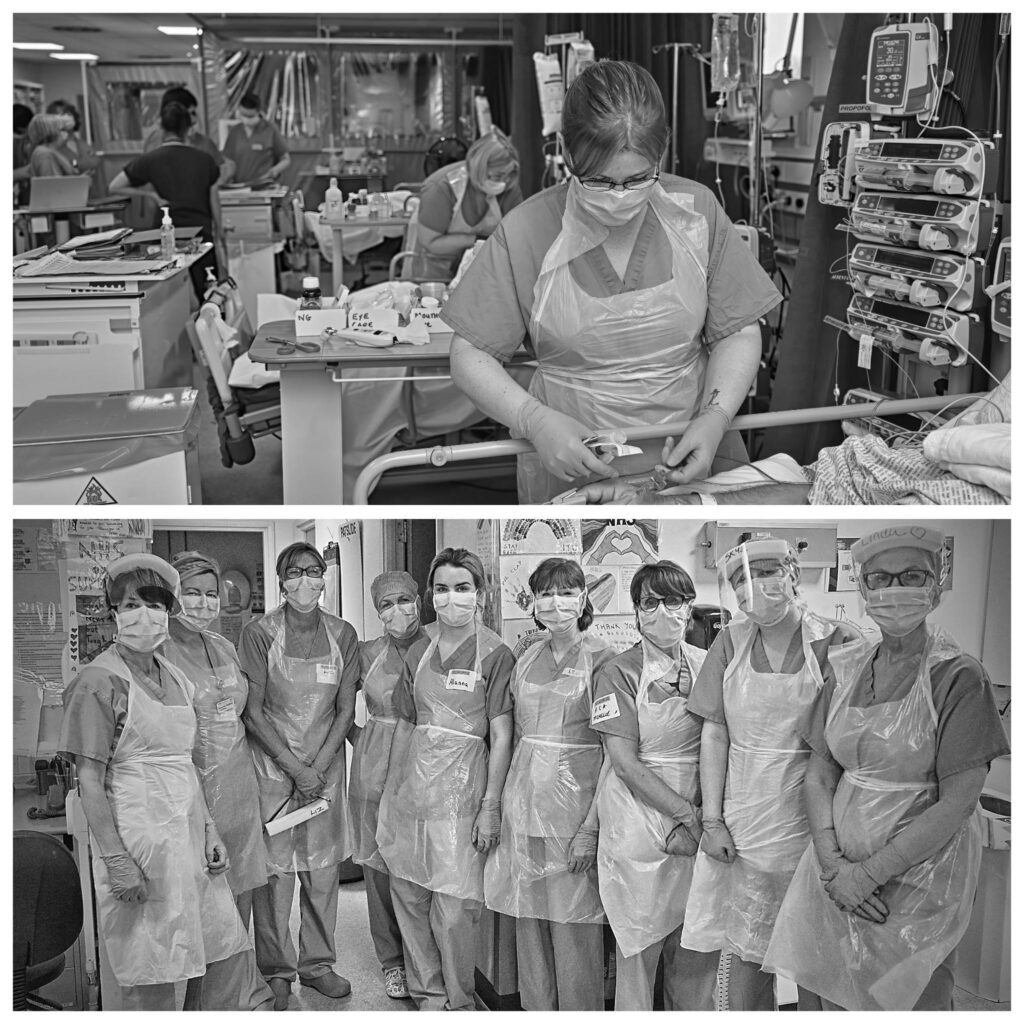
A collection of photos taken on an ICU ward during the pandemic which are being displayed for the first time (produced by Scottish photographer, Yid Whells)
We invite you to come, enter and sit within the installation and explore the stories and voices of the critical care nurses. Look closely, listen carefully and feel deeply as you enter their world and please do leave your reactions, thoughts and messages at the end of the installation. We intend this to provoke a deeper conversation about the conditions and mental health support we provide for the nurses who risked their health and well-being for us all when we needed it most, and continue to do so today.
The installation launches as part of University of Sheffield’s Festival of the Mind with an internal University event on Thursday 5th November at Yorkshire Artspace (at Persistence Works, 21 Brown Street, Sheffield, S12 2BS) and opens to the general public on Friday 6th November running to Sunday 15th November. The installation then moves to London to the Florence Nightingale Museum from Tuesday 6th January until Sunday 28th February. Please do come along and share widely to anybody who might be interested in seeing the installation.
In the coming weeks, in the lead up to the launch, I am going to write on this blog about different features of the installation. I will explore how each element of the installation design emerged, how the collaboration with each artist came about and the challenges that we all faced and overcame to bring this artistic work together. I would also like to reflect a little bit on the future of art installations in academia and, in doing so, critically interrogate the nature of academic “outputs”. Like many in academia, I have become increasingly disillusioned with the emptiness and indeed pointlessness of traditional methods of publishing our work given the exploitation, waste of resources and lack of engagement with the finished “article”. In the coming years the increasing use of rapidly improving Artificial Intelligence will undoubtedly make it easier than ever to churn out “content”, and the artistic process of crafting a traditional article is something that will be even less meaningful (perhaps like doing long division when you have a calculator). As a potential alternative, I have found that the creation of this installation through a series of artistic collaborations with a range of extremely talented people has not only brought to life the results of the study in exciting ways but has also produced something which is, above all, uniquely human. AI could not have created this installation. Maybe it and similar projects, can offer a way of us focusing energy on academic outputs that we create and co-create in vibrant collective communities, and which come to life and can be “experienced” by the general public. In the danger of posing a somewhat optimistic vision for universities of the future, perhaps they might choose to fund academics to create alternative and deeply affecting pieces of work. Perhaps they might acquire their own public galleries and other alternative spaces to showcase not only what their academic research is but what it says, what it feels like to be immersed within it. Perhaps this is one small but significant way that universities can reinvent themselves in the age of AI, reconnect with the public and, in turn, share ideas and influence people’s minds on issues as important as mental health and wellbeing in the nursing profession.
If you would like to see what this might look like in practice please come and visit the installation!