
The installation was an ambitious idea and a huge challenge to bring to life from a somewhat strange vision in my mind to a physical artefact that people could see, hear and touch. There was a danger, though, that we could put all this work in to it and then we struggle to find an audience. It was a fantastic opportunity, therefore, when I read that the University of Sheffield’s Festival of the Mind, had released a call for pieces of research that could engage with the general public. The festival is described as a “mindblowing celebration of the University’s world-leading research…with over 40 free live performances, exhibitions, films and interactive events”. Since its creation in 2012, by Professor Vanessa Toulmin, the family friendly festival has brought more than 200,000 visitors into Sheffield city centre and it was the ideal place for COVID’s Hidden Scars to launch. Not only because it would help us to bring attention to the work and its key messaging but also so we would have a venue in the city where we could work with local artists and then share it with my colleagues who had supported the work along the way. Securing a small amount of additional funding through the Festival and a dedicated slot at Yorkshire Artspace (YAS) at Persistence Works felt like a huge relief in the first instance. Thereafter though it was also a huge support network as I could draw on the extensive expertise of the Festival of Minds team (huge thanks to Lynette Hodges and Gregory Oldfield in particular!) and the expertise of leaders at YAS (huge thanks to Rachael Dodd and her team!). For someone who has virtually zero experience of developing “art” let alone a whole complicated installation all of this support was vital and helped me logistically and artistically to bring the vision to life.
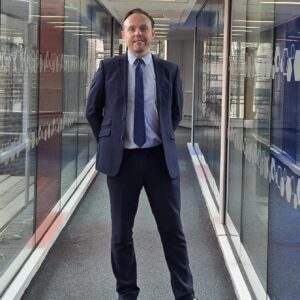
Another huge benefit of this collaboration with the Festival of Minds was the ability to draw upon the publicity machinery of the very experienced team. The opportunity to create my very first podcast in a professional studio which would be shared widely through platforms like Spotify sounded amazing albeit slightly terrifying. Thankfully, the Festival again has many incredibly talented people who were there to guide us all the way. David Heath, for instance, was instrumental in bringing me and two of my artistic collaborators (James Croft and Sally-Ann Spencer Grey) together and guiding the process and Kitty Turner was our wonderful host within the podcast. Her job, amongst many other things, was essentially to train me in a very short space of time on how to facilitate a chat between myself and the artists in a clear and engaging way. This was a really cool experience and something I have learnt a lot from and whilst I listened to the podcast with trepidation (nobody normal enjoys hearing their own voice on these things!), it was actually very good. Partially because Kitty had done such a fantastic job of directing us on the day and editing it in the post-production!
The podcast is introduced on the Festival of Minds Player (on Spotify) as follows and a link to the 30 minute chat follows:
We clapped for NHS staff during the COVID-19 pandemic. But what happened to the nurses who faced its most difficult moments, and how are they coping years later?
From caring for seriously ill patients to watching people die without their families beside them, critical care nurses faced enormous emotional pressure during the pandemic. For many, these experiences left lasting psychological scars.
In this podcast, University of Sheffield researcher Dr Martyn Griffin joins artists, James Croft and Sally Ann Spencer-Grey to discuss COVID’s Hidden Scars, an immersive art installation at Festival of the Mind 2026 exploring the impact of the pandemic on critical care nurses’ mental health and wellbeing.
Drawing on six years of research, including interviews with nurses during and after the pandemic, the project explores moral injury, the emotional distress people can experience when they’re unable to provide the care they believe is right.
Through a recreated hospital bed, a handcrafted quilt, embroidered curtains, a colourful mural and filmed performances, the installation brings nurses’ personal experiences to life. The artists discuss how they turned these difficult stories into artwork, revealing the challenges nurses faced and the different ways they’ve tried to recover.
Listen to discover the lasting impact of COVID-19 on NHS nurses, why many felt forgotten after the public applause faded, and what their experiences can teach us about supporting healthcare workers’ mental health.